When AI Starts Selling: OpenAI’s Bet on Ads and What It Means for the ChatGPT Era
The next big shift in artificial intelligence isn’t about better models or bigger datasets it’s about advertising inside AI assistants.
In early 2026, OpenAI announced it would begin testing advertisements within ChatGPT, marking a dramatic evolution in how one of the world’s most ubiquitous AI products is monetized. This move has already sparked debates about trust, privacy, and the future of conversational AI and could signal a deeper transformation in how AI products compete for attention, revenue, and user loyalty.
A Rare Pivot from Principles to Profit
OpenAI’s original ethos was famously skeptical of ads. CEO Sam Altman and other leaders repeatedly emphasized that AI shouldn’t mimic the engagement-driven, ad-saturated models of social media platforms. But months of internal and public signals from hiring ad-tech engineers to leaked code references culminated in the confirmation that ads would soon reach ChatGPT’s free tier.
OpenAI’s official blog explains the strategy as a way to expand access without charging everyone a subscription, particularly to keep the service available to users who cannot afford paid tiers. Ads will be clearly labeled, outside the core responses, and will not influence the actual AI answers, according to the company. Free and the low-cost ChatGPT Go tier will see ads first, while higher-tier subscribers remain ad-free.
Ads in ChatGPT: What They Might Look Like
So how does advertising even integrate into a chat interface?
Rather than banner ads or video interstitials, OpenAI has suggested a contextual ad placement approach ads possibly appearing below answers that are relevant to the user’s query. For example, after an itinerary suggestion, you might see a sponsored link to a travel site or hotel.
Crucially, the company says:
- Ads will be separate from AI responses
- Conversation content won’t be shared with advertisers
- Personalized ads can be controlled or turned off by users
- Sensitive topics like health, politics, and mental health will not show ads
This is designed to promise monetization without compromising trust but not everyone is convinced.
Industry Tensions: Claude Throws Shade
AI rival Anthropic seized the moment to undercut OpenAI’s move. During the 2026 Super Bowl one of the biggest advertising stages on the planet Anthropic aired a satirical 30-second spot critiquing AI ads, with the tagline: “Ads are coming to AI but not to Claude.” Critics and investor-sentiment trackers even showed the ad scoring higher positive sentiment than OpenAI’s more earnest campaign.
Anthropic’s messaging taps into a broader sentiment:
If AI is supposed to be a trusted assistant, why monetize the conversations users have with it?
This rivalry highlights a fracture in the AI landscape between a democratized, ad-supported model and a premium, trust-centric one.
Why Ads, Why Now?
The shift towards ads isn’t coming out of nowhere. Operating at global scale has enormous costs. ChatGPT reportedly serves over 800 million weekly active users, but only a small fraction pay for subscriptions, leaving infrastructure and compute expenses largely unsupported by revenue.
According to projections, ad revenue could become a significant piece of OpenAI’s financial future potentially billions annually by the end of the decade. Early estimates even suggest advertising and related commissions could comprise a large chunk of projected AI monetization by 2029.
This isn’t just about keeping the lights on it’s about shaping the business model that will sustain AI for the long term.
The Big Questions Users Are Asking
Despite OpenAI’s assurances, critics have raised several concerns:
✔ Trust and neutrality: If ads are optimized for relevance, will they subtly steer users toward certain products or ideas?
✔ User experience: Will what feels like unbiased help become a monetized feed?
✔ Privacy boundaries: Even if conversation content isn’t sold, will context be used to target ads?
✔ Competitive pressure: Will other AI platforms follow suit, or will ad-free alternatives gain market share?
These questions have ignited debates across online communities from #OpenAI forums to tech leadership discussions about whether conversation AI should remain a public good or evolve into a commercial platform rivaling search and social media.
The Slippery Slope of Monetized AI
Some critics warn that adding ads to AI is not just a revenue experiment it is the moment when a tool becomes a media ecosystem. Search engines aren’t remembered for their helpfulness alone they’re remembered for how they monetize attention. If conversational AI follows that path, users might pay with trust even if they don’t pay with cash.
What’s at stake isn’t just user experience it’s the role of AI in society. Is ChatGPT meant to be a neutral assistant? Or a new frontier of targeted influence?
What Happens Next?
OpenAI’s ad rollout is a phased experiment, likely starting with controlled tests in the U.S. before expanding globally. Early advertiser commitments reportedly involve high minimum spends suggesting this is not surface-level experimentation but a strategic push into premium ad territory.
If the tests succeed, and user trust can be maintained, AI advertising could become a mainstream digital channel potentially reshaping how brands communicate and how users consume information.
But if trust erodes, alternatives like ad-free AI platforms or subscription-only models could see rapid uptake.
Either way, this isn’t just another product update.
This is a potential turning point in the economics of AI.
Final Thought
AI has always been a delicate balance between capability, accessibility, and ethical responsibility. Introducing ads into ChatGPT might be a pragmatic business decision but it also forces users, developers, and policymakers to ask a deeper question:
Should AI assistants be monetized like media platforms or protected as spaces of neutral knowledge and trust?
AD
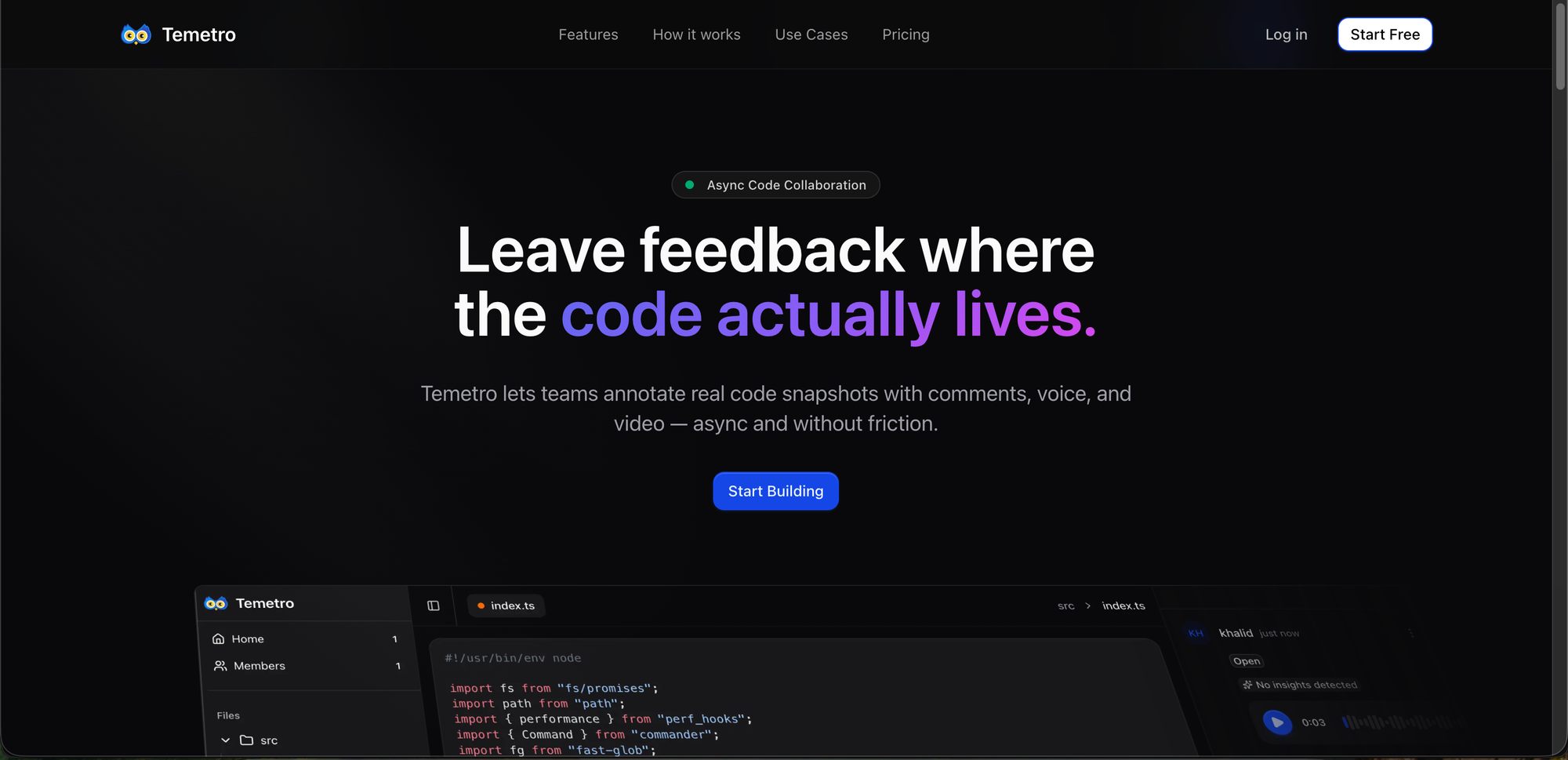
💡 Code deserves context — not chaos.
Temetro lets you attach comments, voice notes, and videos right where the code lives, so teams spend less time explaining and more time building.
Streamline reviews, onboard faster, and preserve tribal knowledge — all without meetings or distractions.
👉 Start free — Temetro