The Machine That Builds Machines: How Anthropic’s AI Wrote Its Own C Compiler and Redefined Software Engineering
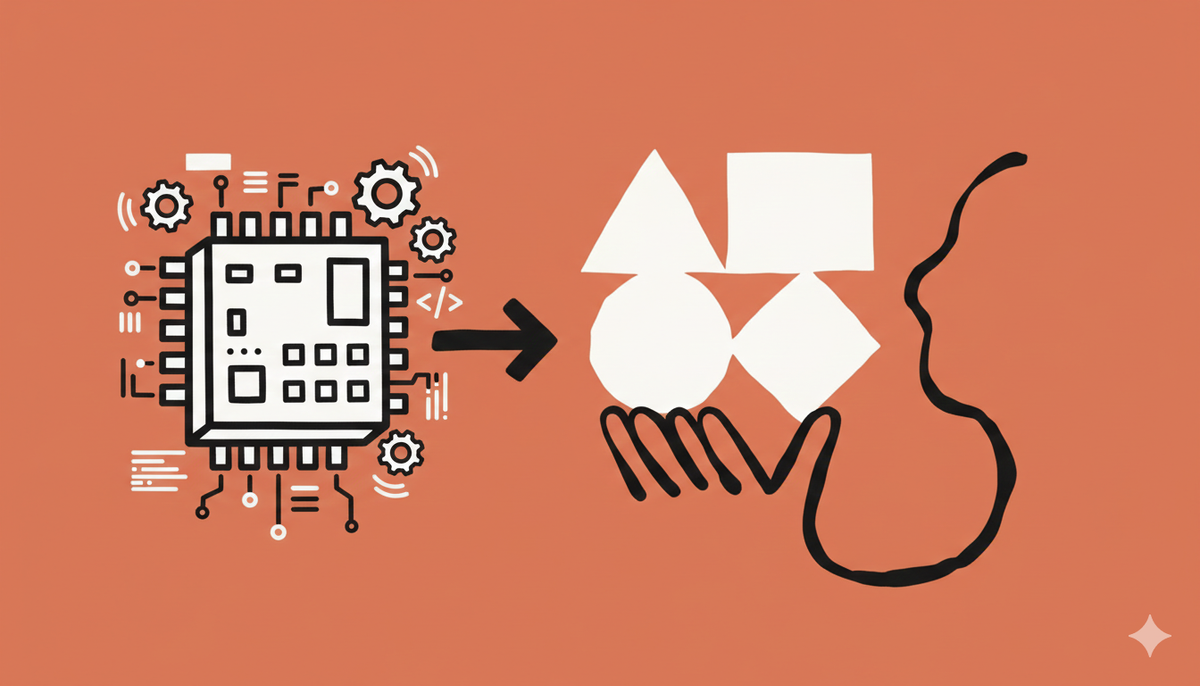
In the hierarchy of software engineering, writing a Compiler is often considered the "final boss." It is the ultimate test of understanding computer science. A compiler is the bedrock software that translates human-readable code into the raw binary instructions that machines understand. It cannot be "mostly" right; it must be mathematically perfect.
For decades, this has been the exclusive domain of human experts who have spent years studying parser logic and memory management. But recently, the engineering team at Anthropic shattered this ceiling. They didn't just use their AI model, Claude, to write a script or a chatbot—they used it to architect and build a functional C Compiler from scratch.
This achievement is not just a cool demo. It represents a fundamental shift in the capabilities of Large Language Models (LLMs), moving them from "creative assistants" to "deterministic engineers."
The Impossible Contradiction: Probability vs. Precision
To understand why this is a big deal, you have to understand the inherent conflict between AI and Compilers:
- LLMs are Probabilistic: They work by guessing the next likely word. They are great at poetry and conversation, but they are prone to "hallucinations" (making things up).
- Compilers are Deterministic: A compiler is a rigid system of rules. If a single bit is off, or a memory address is miscalculated by one byte, the entire program crashes (Segmentation Fault).
The challenge Anthropic faced was: Can a system built on probability build a system that requires absolute precision?
Deconstructing the Feat: How Claude Built the Compiler
The team didn't just ask Claude to "write a C compiler" in one go. That would have failed. Instead, they treated the AI as a junior engineer, guiding it through the classic stages of compiler design. This process revealed the model's startling ability to reason through complex logic.
1. The Lexer: Understanding the "Words"
The first step was building the Lexer. Claude had to learn to look at a stream of text like int main() { return 0; } and break it down into "tokens" (Keyword, Identifier, Symbol, Integer).
- The Surprise: Claude didn't just pattern-match; it understood the nuance of the C language specification, correctly handling edge cases in how strings and comments are processed.
2. The Parser: Building the "Grammar"
This is where it gets difficult. The AI had to construct an Abstract Syntax Tree (AST). It had to understand that x = y + 2 isn't just a list of characters, but a hierarchical tree where + is an operation applied to y and 2, and the result is assigned to x.
- The Engineering: Claude successfully navigated the notoriously complex grammar of C (the "recursive descent" parsing), managing precedence rules that often trip up human students.
3. Code Generation: The "Brain Surgery" of Coding
The final and hardest step was emitting Assembly code (specifically x86-64). This requires managing the CPU’s stack and registers manually.
- The Challenge: If the AI forgot to push a register to the stack before calling a function, the program would crash.
- The Result: Through an iterative process, Claude learned to manage the stack frame, allocate memory for variables, and generate working machine code.
The "Self-Healing" Loop: AI Debugging AI
The most revolutionary part of Anthropic’s experiment was not the initial code, but the debugging process.
When the generated compiler failed a test case (which happened often initially), the engineers didn't fix it themselves. They simply fed the error message back to Claude.
- The Input: "The compiler you wrote crashed with a generic SegFault on this input."
- The Reaction: Claude would analyze its own code, trace the logic, identify where it mishandled a memory pointer, and rewrite the function to fix it.
This "Self-Correction Loop" is the Holy Grail of AI development. It proves that the model isn't just regurgitating training data; it maintains a mental model of how the software should work and can reason its way out of a corner.
Why This Changes Everything (The 2026 Perspective)
Why does a C compiler matter in 2026? We already have GCC and Clang. The value isn't the compiler itself, but what this capability unlocks for the future of technology:
1. The End of Legacy Code Nightmares
The world runs on ancient code (COBOL in banks, Fortran in scientific simulations) that is too dangerous to touch. If AI can understand and build compilers, it can be tasked to transpile and modernize this critical infrastructure with mathematical safety, migrating 50-year-old systems to modern languages like Rust without human error.
2. Domain-Specific Languages (DSLs) for Everyone
Imagine a biologist who wants a programming language specifically for DNA sequencing, or a physicist who needs a language for quantum states. Previously, building a custom language took years. With this technology, a "Compiler Agent" could design a robust, custom programming language for a specific scientific niche in an afternoon.
3. Sandbox Security
One of the biggest risks in software is memory safety (buffer overflows). An AI-designed compiler could be instructed to enforce strict security rules that human developers might be too lazy to implement, effectively immunizing software against entire classes of cyberattacks before they are even written.
Conclusion: From Copilot to Architect
Anthropic’s experiment with the C compiler signals the end of the "Copilot" era and the beginning of the "Architect" era. We are no longer just using AI to autocomplete our sentences. We are using it to lay the concrete foundations of our digital world.
The question is no longer "Can AI write code?" The question is now: "What kind of new computing universes can we build when the compiler itself is intelligent?"
AD:
💡 Code deserves context — not chaos.
Temetro lets you attach comments, voice notes, and videos right where the code lives, so teams spend less time explaining and more time building.
Streamline reviews, onboard faster, and preserve tribal knowledge — all without meetings or distractions.
👉 Start free — Temetro